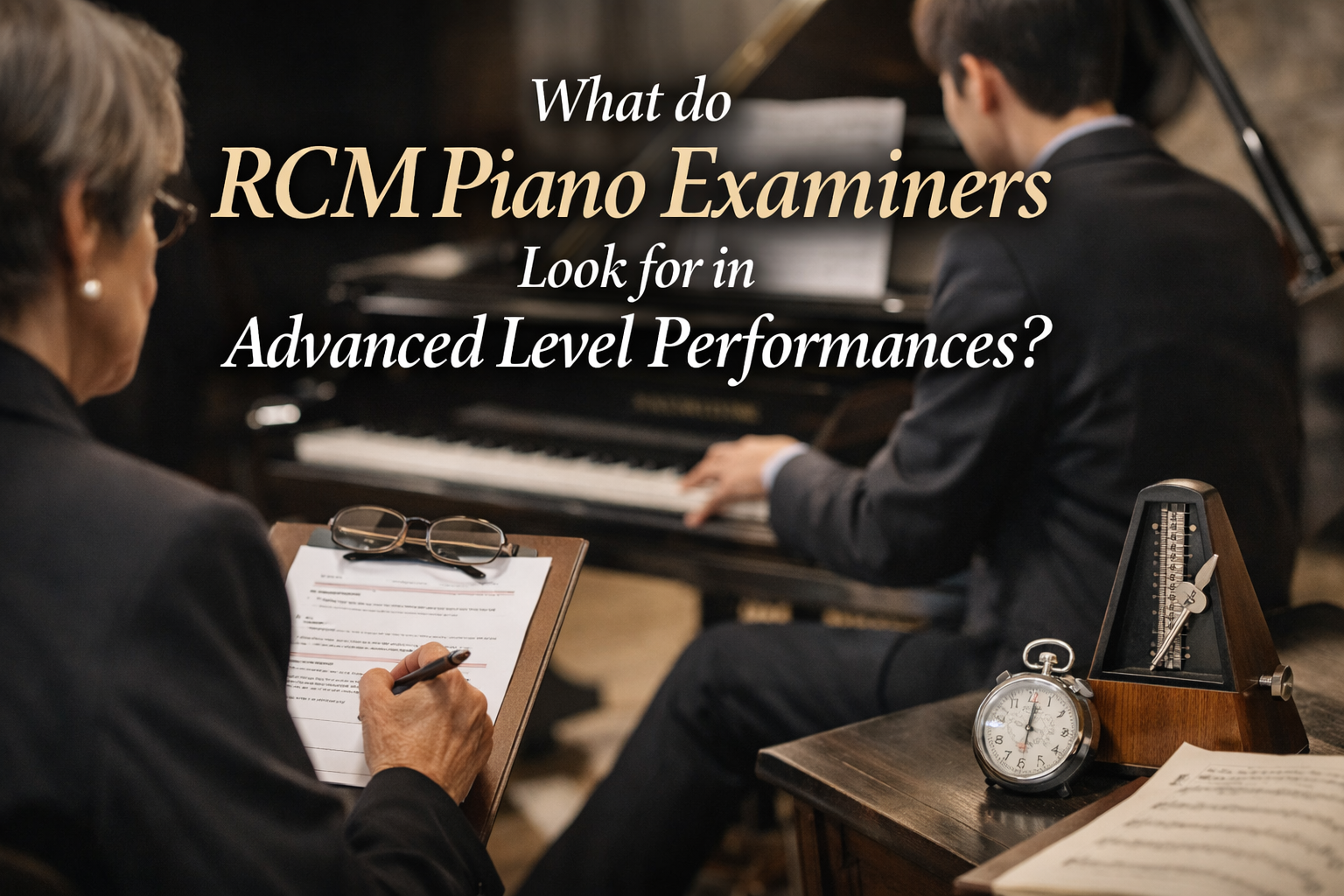
Preparing for advanced level piano exams can feel both exciting and overwhelming. Students often reach a stage where technical skills are strong, repertoire is challenging, and expectations are significantly higher. At this level, success is no longer about simply playing the correct notes. It becomes about artistry, depth, and communication.
Drawing from the teaching insights of Miss Mila, this guide explores what truly matters in advanced RCM piano performances today. Understanding these expectations can help students refine their approach, stand out musically, and achieve top results.
Understanding the Modern Standard of Advanced RCM Exams
Advanced piano exams reflect a shift in musical expectations. While strong technique remains essential, examiners are increasingly focused on musical maturity and interpretive awareness.
Students are expected to:
- Demonstrate a clear understanding of style
- Communicate musical ideas convincingly
- Show control, consistency, and confidence
- Perform with individuality while respecting the score
In today’s competitive environment, a technically correct performance is only the baseline. What sets candidates apart is how they bring the music to life.
1. Musical Expression and Artistic Interpretation
One of the first things examiners notice is whether the performance feels expressive or mechanical.
At advanced levels, expression is not optional. It is central to the performance. Examiners listen for:
- Phrasing that reflects musical sentences
- Dynamic contrast that feels intentional
- Emotional engagement with the piece
- A sense of storytelling
Students should avoid playing everything at a constant intensity. Instead, they should shape each phrase thoughtfully, highlighting tension and release.
Miss Mila emphasizes that students must understand the emotional character of each piece. Whether it is lyrical, dramatic, playful, or introspective, the interpretation should feel authentic and consistent.
2. Stylistic Accuracy Across Repertoire
Advanced exams typically include works from different musical periods. Each style requires a distinct approach.
Examiners expect students to adapt their playing according to the composer and era.
Baroque
- Clear articulation
- Controlled use of dynamics
- Independence between voices
Classical
- Balanced phrasing
- Clean textures
- Elegant shaping of musical lines
Romantic
- Rich tone
- Flexible tempo
- Expressive rubato used tastefully
Contemporary
- Accurate rhythm
- Attention to unusual textures and harmonies
- Confidence with modern techniques
A common mistake is applying the same style across all pieces. Examiners quickly notice when stylistic awareness is lacking.
3. Technical Mastery and Control
While musicality is crucial, technique still plays a major role.
At advanced levels, technique should feel effortless. Examiners look for:
- Evenness in scales and passages
- Clarity in fast runs
- Control in soft dynamics
- Precision in articulation
Mistakes can happen, but what matters more is overall control and recovery. A student who maintains flow and confidence will be evaluated more positively than one who stops or hesitates.
Miss Mila encourages students to go beyond repetition and focus on mindful practice. Understanding how the body moves, how tension affects sound, and how to achieve efficiency is key.
4. Tone Production and Sound Quality
Tone is often what distinguishes an average performance from an exceptional one.
Examiners listen carefully to the quality of sound produced. This includes:
- Warmth and depth of tone
- Balance between melody and accompaniment
- Ability to project a singing line
- Control of voicing within chords
Students should avoid harsh or percussive playing unless it is stylistically appropriate. Instead, they should aim for a controlled and varied tone palette.
Developing tone requires attention to touch, arm weight, and listening skills. Miss Mila often highlights that students must train their ears as much as their fingers.
5. Rhythmic Stability and Tempo Control
A strong sense of rhythm is essential at advanced levels.
Examiners expect:
- Steady tempo throughout the piece
- Accurate subdivisions
- Control during tempo changes
- Consistency in complex rhythms
Rushing and dragging are common issues, especially in technically demanding passages. Practicing with a metronome can help, but students must also develop internal rhythm.
In expressive sections, tempo flexibility should feel natural, not exaggerated. Rubato should enhance the musical line rather than disrupt it.
6. Memory and Security
Most advanced performances are played from memory, and examiners assess how secure the performance feels.
Key expectations include:
- Confident recall of the music
- Ability to continue smoothly after small slips
- No visible panic or hesitation
Memory is not just about muscle repetition. Students should understand the structure, harmony, and patterns within the music.
Miss Mila often advises combining different memory strategies:
- Visual memory of the score
- Analytical understanding
- Aural familiarity
- Muscle memory
This layered approach creates a more reliable performance.
7. Pedaling Technique
Pedal use becomes more refined and essential at advanced levels.
Examiners listen for:
- Clean pedaling without blur
- Appropriate use of sustain for each style
- Coordination between hands and feet
- Subtle changes that enhance musical phrasing
Over-pedaling is one of the most common issues. It can make the sound muddy and unclear.
Students should practice slowly to coordinate pedal changes precisely, especially in passages with harmonic shifts.
8. Articulation and Clarity
Articulation gives character to the music.
Examiners pay attention to:
- Consistency in staccato and legato
- Clear differentiation between articulations
- Precision in repeated notes and fast passages
Articulation should match the style and mood of the piece. For example, crisp articulation is essential in Baroque works, while smoother phrasing is often required in Romantic repertoire.
9. Stage Presence and Performance Confidence
Even in an exam setting, presentation matters.
Examiners observe:
- How the student approaches the piano
- Confidence and composure
- Focus during performance
- Recovery from mistakes
A confident performer creates a positive impression from the start. Nervousness is natural, but it should not dominate the performance.
Miss Mila encourages students to simulate exam conditions during practice. Performing regularly for others can build confidence and reduce anxiety.
10. Attention to Detail in the Score
Advanced students are expected to respect the score carefully.
This includes:
- Observing dynamics and articulations
- Following tempo markings
- Not missing repeats or structural elements
- Understanding composer intentions
Ignoring details suggests a lack of preparation or awareness. Examiners appreciate performances that show thorough study and respect for the music.
11. Musical Communication and Engagement
Ultimately, examiners want to feel something.
A strong performance communicates clearly with the listener. It should:
- Draw the audience into the music
- Maintain interest throughout
- Convey a clear musical message
Students should think beyond accuracy and ask themselves what they want to express.
Miss Mila often reminds students that music is a language. Playing should feel like speaking, not reciting.
12. Consistency Across the Entire Program
Advanced exams typically involve multiple pieces. Examiners assess the overall program, not just individual performances.
They look for:
- Consistent quality across all pieces
- Balanced repertoire
- Ability to transition between styles
A strong start followed by weaker performances can affect the final evaluation. Students should prepare all pieces equally well.
Common Mistakes to Avoid
Even advanced students can fall into certain traps:
- Over-focusing on technique while neglecting musicality
- Playing too safely without expressive risk
- Ignoring stylistic differences
- Overusing pedal
- Losing focus after small mistakes
Recognizing these issues early can help students refine their performance.
How to Prepare Effectively
Preparation at this level requires a thoughtful approach.
Practice Strategies
- Break pieces into sections
- Practice slowly and deliberately
- Record and evaluate performances
- Focus on problem areas
Musical Development
- Listen to professional recordings
- Study the composer and style
- Analyze the structure of each piece
Performance Readiness
- Perform regularly for others
- Simulate exam conditions
- Build mental focus and resilience
Miss Mila emphasizes that quality practice is far more important than quantity. Focused, intentional sessions lead to better results.
FAQ Section
What is the most important factor in an advanced RCM piano exam?
Musical expression and interpretation are often the most important. While technique is essential, examiners prioritize performances that communicate meaning and emotion.
Do small mistakes affect the final mark significantly?
Not necessarily. Occasional mistakes are acceptable if the overall performance is strong, confident, and musically convincing.
How important is memorization?
Memorization is very important. A secure memory allows students to focus on musical expression rather than worrying about notes.
Can rubato improve a performance?
Yes, but it must be used tastefully. Rubato should enhance the musical line, not disrupt the rhythm or structure.
How can students improve tone quality?
By focusing on touch, listening carefully, and experimenting with different ways of producing sound. Developing tone takes time and awareness.
Is technical perfection required for high marks?
Perfection is not required, but a high level of control and consistency is expected. Musicality often carries more weight than flawless execution.
How should students handle performance anxiety?
Regular performance practice, mental preparation, and confidence-building exercises can help manage anxiety effectively.
What role does pedaling play in advanced exams?
Pedaling is crucial. It should enhance the sound without creating blur. Clean and controlled pedaling reflects a high level of skill.
Final Thoughts
Advanced RCM piano exams represent a significant milestone in a student’s musical journey. They require not only technical skill but also artistic depth and personal expression.
Success comes from understanding what examiners truly value and preparing with intention. With guidance from experienced teachers like Miss Mila, students can develop the confidence, skill, and musical insight needed to excel.
A compelling performance is not just about playing the piano well. It is about connecting with the music and sharing that connection with others.